Check Counterfeit Money: A Step-by-Step Guide
- First published:
- 2 min read
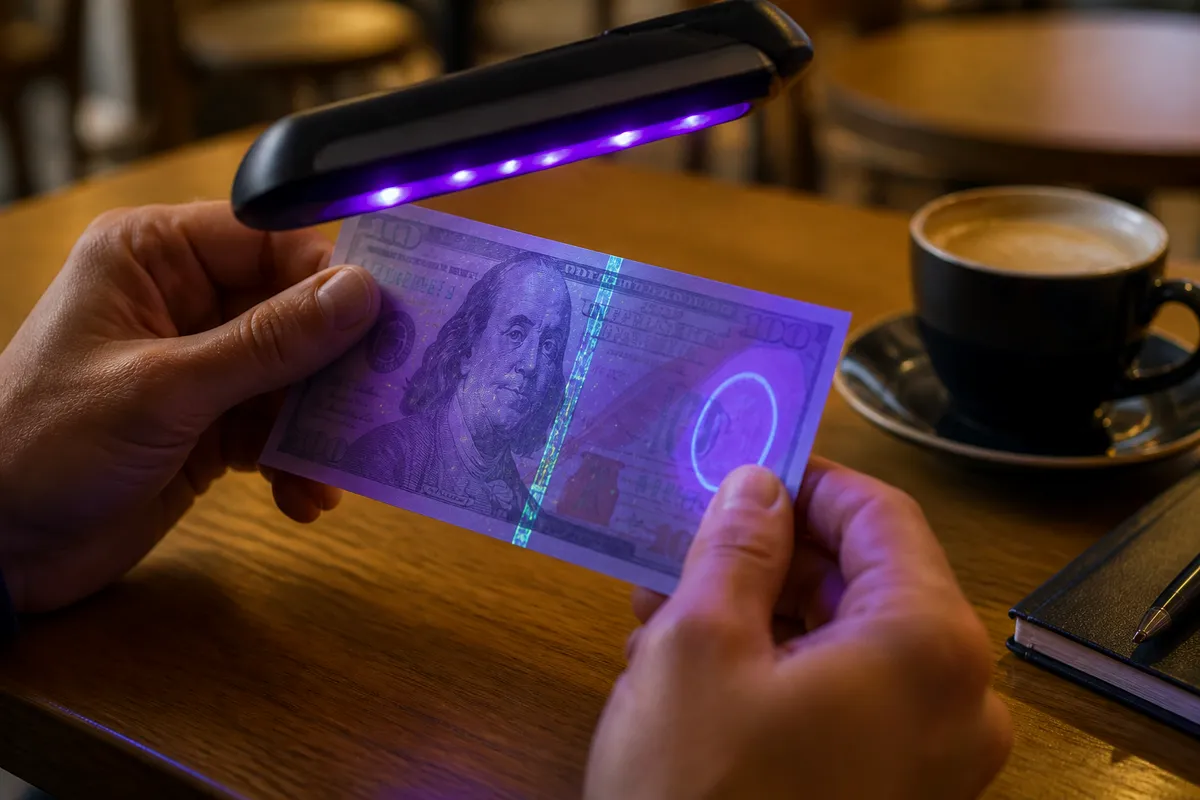
What You’ll Get from This Guide
Step-by-step verification methods
Learn to use security features like watermarks, security threads, and color-shifting ink to confirm authenticity [3][1][4][2][5].
Clear identification of genuine vs. fake notes
Spot red flags such as 'For Motion Picture Use Only' or 'Replica' markings on non-genuine bills [4].
Action plan for suspected counterfeits
Know how to handle and report a suspect note to law enforcement immediately [3][6][7].
Denomination-specific security checks
Verify unique features for each bill, like the 3-D Security Ribbon on $100 notes or embedded threads on $5 and higher [1][2][5].
Practical tips for everyday use
Use the feel, tilt, and check method to inspect notes quickly in daily transactions [4][2].
How to Verify U.S. Currency Authenticity in 5 Steps
- Check security features first
- Tilt the bill to see color shifts
Look for color-shifting ink in the lower right corner. It changes from copper to green when tilted on genuine bills (4).
- Feel the paper texture
Authentic U.S. currency has a slightly rough texture due to its unique paper composition and printing process (4).
- Inspect for replica markings
Reject any bill with 'For Motion Picture Use Only' or 'Replica' printed on it. These are not legal tender (4).
- Report suspected counterfeits
Risks, Limitations, and Guarantees
Verifying U.S. currency authenticity comes with risks and limitations. The most significant risk is receiving counterfeit money. If a counterfeit bill is accepted, it cannot be exchanged for genuine currency, and passing counterfeit notes is illegal (3).
Relying solely on counterfeit detection pens is not advisable. These tools can produce false results, leading to misidentification of genuine bills (3). Instead, focus on the built-in security features of the currency, such as the watermark, security thread, and color-shifting ink. These features provide reliable indicators of authenticity (3).
When suspecting a counterfeit bill, immediate action is essential. Notify local law enforcement, store the suspect note separately, and hand it over to authorities promptly (3). This process ensures the counterfeit is documented and handled correctly.
It's important to note that the U.S. Secret Service will no longer accept electronic submissions of suspected counterfeit currency after November 1, 2024. All reports must be made in person at a local field office or police department (6).
Being aware of these risks and limitations can help prevent financial loss. Always check the security features before accepting any U.S. banknote.
Sources and further reading
- Teller Toolkit: A guide to identifying genuine currency (2024)
- CEP - Feel-Tilt-Check Card - English (2024)
- The Fed - How do I determine if a banknote is genuine?
- CEP - Quick Glance Reference Card - English (2024)
- Training Course - Security | U.S. Currency Education Program
- Reporting Suspected Counterfeit Currency to the United States Secret Service (2024)
- Report a Counterfeit | U.S. Currency Education Program