Buy fake documents
- First published:
- 4 min read
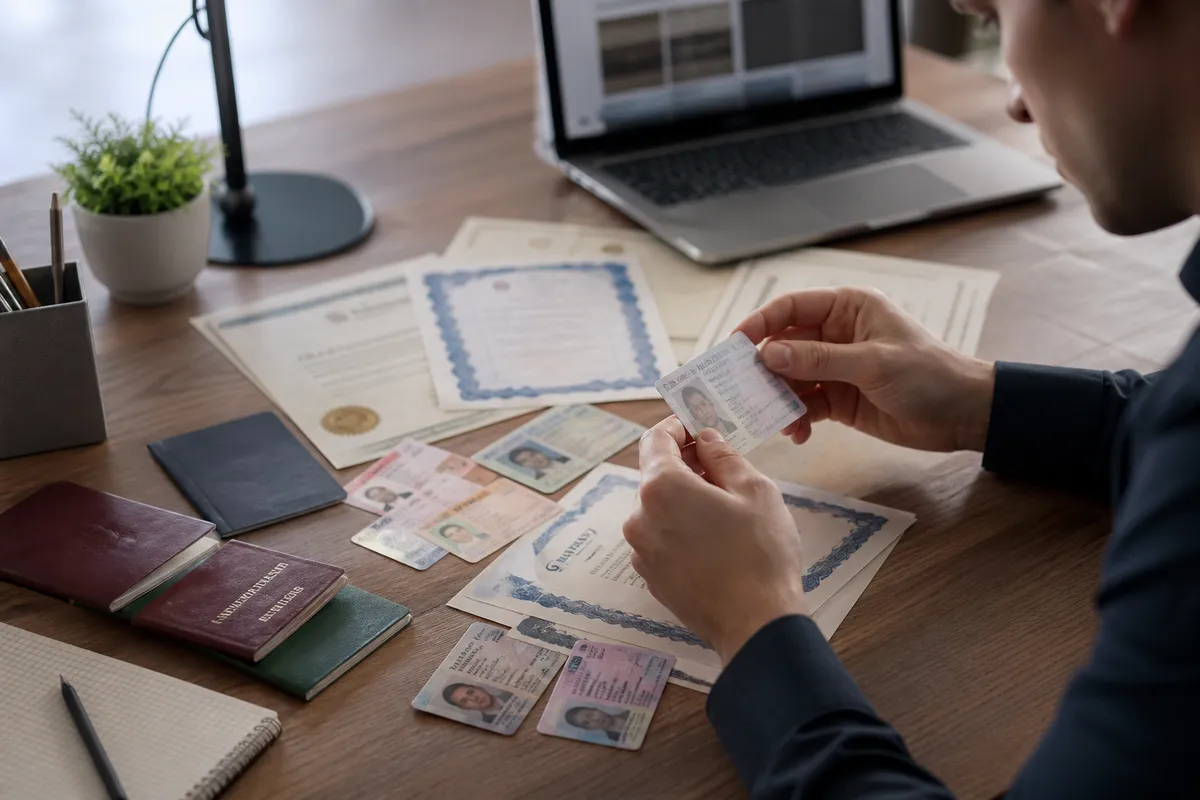
What You Get with Prop Documents
Theatrical-Use Replicas
High-quality prop documents designed for film, TV, or stage productions. All items must include clear disclaimers stating they are for theatrical or novelty use only [1].
Novelty Items with Legal Disclaimers
Documents labeled as novelty or gag gifts, with visible warnings to prevent misuse. These are not valid for official purposes [1].
Cataloged Props for Production
Each prop is documented in a Props List, detailing scene usage and actor requirements to ensure transparency and compliance [2].
Custom Designs for Film Needs
Tailored prop documents to match specific production requirements, from passports to diplomas, all marked as replicas [3].
Compliance with Industry Standards
Props meet film and TV industry norms, with accurate labeling to distinguish them from real documents [3].
How to Get Prop Documents for Film or Novelty Use
- Check Legal Compliance First
- Verify the Seller’s Legitimacy
- Confirm the Document’s Purpose
Prop documents for film or TV must be catalogued in a Props List with scene, actor, and usage details (2). Novelty items must never be used for legal or official purposes.
- Review Labeling and Disclaimers
- Understand the Risks
- Wait for Delivery and Inspect
Prop documents typically arrive within 5–10 business days, depending on the seller. Inspect for required disclaimers and accuracy before use.
- Document for Legal Protection
Keep records of purchase, disclaimers, and intended use to demonstrate compliance if questioned by authorities.
Risks, Limitations, and Guarantees
Purchasing fake documents involves notable risks. Under 18 U.S. Code § 1028, producing or possessing false identification with intent to defraud is a federal crime. This can lead to a prison sentence of up to 15 years if linked to serious offenses like terrorism or drug trafficking (4). The U.S. Federal Trade Commission (FTC) defines a 'Fake Document' as one that misrepresents identity or authenticity, regardless of whether it is paper or electronic (7).
Limitations apply to novelty items as well. U.S. federal law prohibits forging documents to satisfy immigration requirements or obtain benefits, with civil penalties ranging from $250 to $5,000 per document (10). Using fake documents to defraud any U.S. agency is considered a felony, regardless of their intended novelty use (6). Sellers must ensure that prop documents are clearly labeled for theatrical or novelty use only (1).
Before making a purchase, verify the seller's credibility. Avoid vendors with FTC injunctions or penalties for selling fake documents, as they may pose legal risks (7). Confirm that the documents are properly cataloged in a Props List for film production, detailing their intended usage (2).
If a return or cancellation is needed, review the seller's policy. Reputable sellers typically provide clear guidelines for returns. Keeping records of purchases and disclaimers is advisable for future reference, as it helps demonstrate compliance if questioned by authorities.
Understanding these risks and limitations is crucial for compliance and protection against legal repercussions.
Good to know
Is it illegal to make fake documents?
Yes, under 18 U.S. Code § 1028, producing or possessing a false identification document with intent to defraud is a federal crime. Penalties can reach up to 15 years in prison if linked to serious offenses like terrorism or drug trafficking (4). Even novelty items must not be used for fraudulent purposes (5).
Is using fake documents a felony?
Using a fake document to defraud the United States or any of its agencies is a felony under U.S. federal law. This applies regardless of the document’s intended novelty use, with punishments including fines or imprisonment (6).
Sources and further reading
- COMPLAINT (Colorado Attorney General, 2023)
- Fact File: Production Management and Legal Considerations (CCEA, 2020)
- Industry-Specific Standards for Film and Television Production Documentation (Stilo)
- 18 USC 1028: Fraud and related activity in connection with identification documents
- U.S.C. Title 18 - CRIMES AND CRIMINAL PROCEDURE
- U.S.C. Title 18 - CRIMES AND CRIMINAL PROCEDURE
- Stipulated Order For Permanent Injunction And Monetary Judgment (FTC)
- Complaint For Permanent Injunction and Other Equitable Relief (FTC, 2018)
- 18 USC 2318: Trafficking in counterfeit labels, illicit labels, or counterfeit documentation
- U.S.C. Title 8 - ALIENS AND NATIONALITY
- Common Issues That Arise in AI Sanction Jurisprudence (ABA, 2024)
- Artificial Intelligence: Guidance for Use of AI and Generative AI in Courts (NCSC, 2024)