Buy Fake Birth Certificate: Risks and Realities
- First published:
- 6 min read
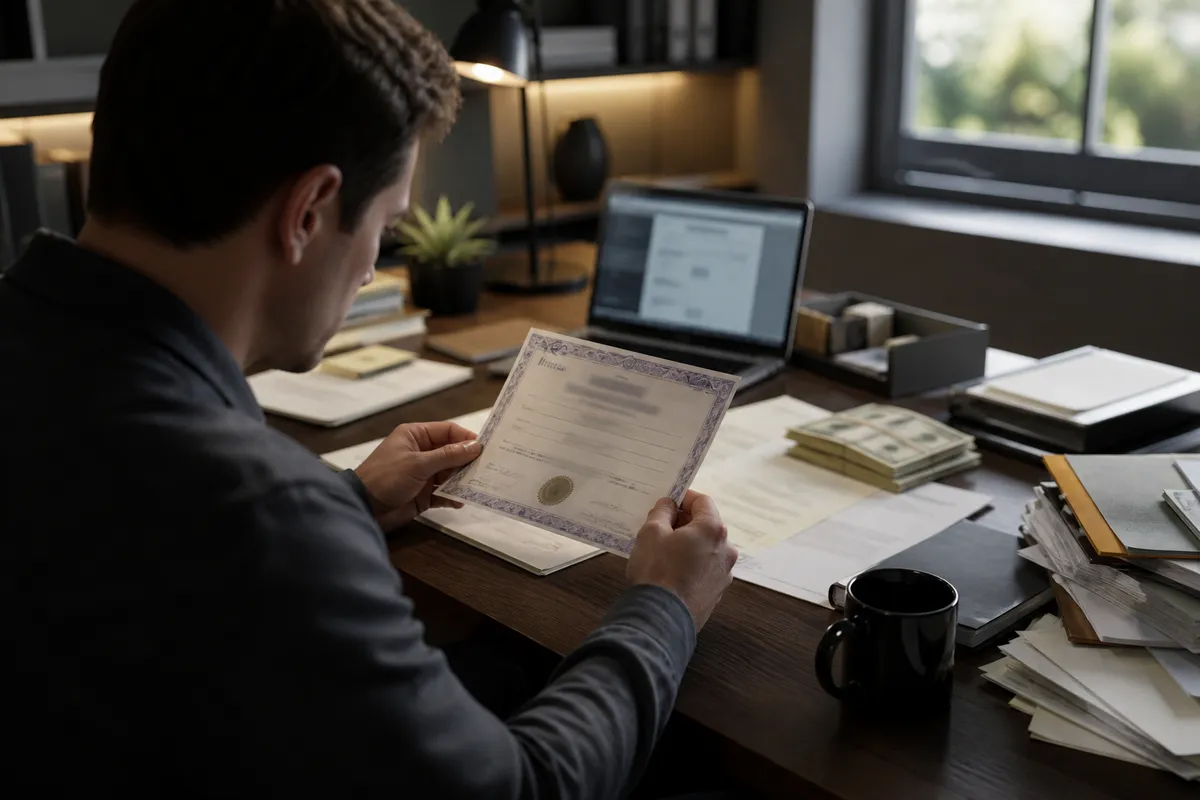
What You Get
Novelty-Only Document
A prop birth certificate designed for film, theater, or personal novelty use. It lacks legal validity and cannot be used for official purposes.
Realistic Design
A document that mimics the appearance of a genuine U.S. birth certificate, including seals, signatures, and layout, but without official backing.
Customizable Details
Options to include fictional names, dates, and locations to match your project or novelty needs.
No Legal Standing
The document cannot be used to verify identity, citizenship, or age in any official capacity under U.S. law [2].
How to Obtain a Fake Birth Certificate: Legal Steps for Film and Novelty Use
- Confirm the Purpose
Novelty or film production are the only legal uses. Any intent to deceive government agencies or commit fraud violates 18 U.S. Code § 1028, with penalties up to 15 years in prison (1).
- Choose a Reputable Supplier
Select vendors specializing in prop money and documents for entertainment. Verify they explicitly state products are for novelty or film use only.
- Provide Required Details
Supply the name, birth date, and location as needed for the prop. Avoid using real personal data to prevent identity theft risks (3).
- Check Document Features
- Review Delivery and Timeline
Most suppliers ship within 5–10 business days. Confirm tracking and discreet packaging to avoid legal scrutiny.
- Verify Legal Compliance
Never use the document for official purposes. Possession of five or more false IDs with intent to defraud is a federal crime (1).
- Store Securely
Risks, Limitations, and Guarantees
Purchasing a fake birth certificate involves significant legal risks. Under U.S. federal law, knowingly producing or possessing a false birth certificate with intent to defraud can lead to imprisonment for up to 15 years (1). This applies even if the document is intended solely for novelty purposes.
Limitations are straightforward. A novelty birth certificate cannot be used for any official purposes, such as applying for a passport or verifying identity (2). Always ensure the document clearly states its novelty status to avoid misunderstandings. For instance, a prop used in a film should be marked as “for entertainment purposes only.”
Before making a purchase, verify the vendor's reputation. Look for suppliers specializing in prop documents for film or novelty use. Avoid vendors suggesting the document can be used in real-world situations, as this could lead to legal trouble.
If a return or cancellation is necessary, check the vendor's policies beforehand. Some may not accept returns on custom orders, while others might have a limited return window. For example, a vendor could have a policy stating that returns are only accepted within 14 days of receipt.
Understanding these risks and limitations is essential when considering a fake birth certificate. Always prioritize legal compliance to avoid potential consequences.
What Is a Fake Birth Certificate and Why Do People Buy One?
A fake birth certificate is a fabricated or altered document designed to resemble an official record of birth. Unlike genuine certificates issued by state or local registrars, these are not legally valid and cannot be used for government or financial purposes. They often replicate the layout, seals, and signatures of real documents but lack the official backing required for legal recognition (2).
People buy fake birth certificates for a few specific reasons. The most common is novelty use, such as pranks, personal collections, or themed events. Film and theater productions also rely on them for props, ensuring scenes involving official documents look authentic without using real, sensitive information. In these cases, the document is purely decorative and serves no functional purpose beyond its visual role.
Another scenario involves historical reenactments or educational demonstrations. Museums, schools, or historical societies may use replicas to illustrate past eras without risking damage to original documents. These are clearly labeled as non-official and intended for display only.
The line between novelty and fraud is sharp. While owning a fake birth certificate for entertainment or artistic purposes may not violate the law, using it to deceive—such as for employment, travel, or identity verification—crosses into criminal territory. Federal law explicitly prohibits producing or possessing false identification documents with intent to defraud, carrying penalties up to 15 years in prison (1). Even possession of multiple fake documents, regardless of immediate use, can trigger the same legal consequences (1).
Genuine birth certificates must meet strict criteria to be valid. They include the city, county, or state of birth, a filing date with the registrar’s office within one year of birth, an official seal or stamp, and the registrar’s signature (2). Delayed certificates, filed more than a year after birth, are treated as secondary evidence and may require additional documentation for official use, such as passport applications (2).
The appeal of a fake birth certificate lies in its realism, but the risks of misuse are severe. Identity theft remains a widespread issue, with birth certificates frequently targeted by fraudsters to create false identities or access services illegally (3) (7). Law enforcement agencies, including ICE’s Forensic Laboratory, actively examine documents for forgeries, making detection a constant threat for those attempting to use fakes unlawfully (8) (4).
The takeaway is clear: fake birth certificates serve a niche purpose in entertainment and education, but their legal boundaries are non-negotiable.
Good to know
Is making or using a fake birth certificate illegal?
Yes. Under 18 U.S. Code § 1028, producing or possessing a fake birth certificate with intent to defraud carries up to 15 years in federal prison (1). Possession of five or more false IDs with unlawful intent triggers the same penalty (1). State laws, like those in Missouri and New Jersey, also criminalize counterfeiting or altering birth records (5) (6).
How to spot fake birth certificates?
Genuine U.S. birth certificates include the city/state of birth, a filing date within one year, an official seal, and a registrar’s signature (2). The ICE Guide to Selected U.S. Travel and Identity Documents outlines visual and technical cues to detect forgeries, such as paper quality and ink consistency (4).
Can someone steal my identity using my birth certificate?
Yes. Birth certificates are frequently exploited for identity theft, with 1.1 million cases reported to the FTC in 2024, accounting for 18% of complaints (3). Fraudsters often pair them with Social Security numbers to create false identities (7).
Where can I buy a fake birth certificate for film production?
Reputable suppliers specializing in prop documents for film or novelty use offer realistic replicas. Verify the vendor explicitly states the document is for entertainment only and lacks legal validity (2). Avoid suppliers implying real-world use, as this violates federal law (1).
Are hospital birth records the same as birth certificates?
No. Hospital birth records are internal documents created at birth, while a birth certificate is an official state-issued record filed with the registrar’s office (2). The latter is required for legal purposes, such as passport applications, and must include a filing date within one year of birth (2).
Sources and further reading
- 18 USC 1028: Fraud and related activity in connection with identification documents
- Citizenship Evidence | U.S. Department of State
- Consumer Sentinel Network Data Book 2024
- Guide to Selected U.S. Travel and Identity Documents | ICE
- Acts Which Constitute Crimes | Missouri Department of Health
- 2024 New Jersey Revised Statutes Title 2C - The New Jersey Code of Criminal Justice
- ITRC 2023 Trends in Identity Report
- Identity and Benefit Fraud | ICE